Table of Contents
Learning Piano with a Focus on Dynamics
Mastering the piano involves much more than simply hitting the right notes. It requires a deep understanding of dynamics, which are crucial for conveying emotion and intention through music. Dynamics refer to the variations in loudness between notes or phrases. In this introduction, we explore how focusing on dynamics can enhance your piano skills, making your performances more expressive and impactful. This crucial aspect of piano education not only improves your technical skills but also deepens your overall musical expression and connection to the audience.
Understanding Piano Dynamics: From pp to ff
Dynamics in piano music refer to the volume of the sound and are essential for expressing mood and emotion in pieces. They range from very soft to very loud, indicated by specific Italian terms and corresponding symbols. Mastering dynamics is crucial for dynamic contrast and shaping the musical narrative.


Logitech MK270 Wireless Keyboard and Mouse Combo for Windows, 2.4 GHz, 8 Multimedia Keys, PC, Laptop, Wireless Keyboard Compact Mouse Combo - Black
23% Off
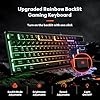



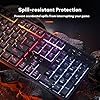
Redragon K521 Upgrade Rainbow LED Gaming Keyboard, 104 Keys Wired Mechanical Feeling Keyboard with Multimedia Keys, One-Touch Backlit, Anti-Ghosting, Compatible with PC, Mac, PS4/5, Xbox
20% Off


Logitech K270 Wireless Keyboard for Windows, 2.4 GHz Wireless, Full-Size, Number Pad, 8 Multimedia Keys, 2-Year Battery Life, Compatible with PC, Laptop, Black
33% Off


EPOMAKER x Aula F75 Gasket Mechanical Keyboard, 75% Wireless Hot Swappable Gaming Keyboard with Five-Layer Padding&Knob, Bluetooth/2.4GHz/USB-C, RGB (Light Blue, LEOBOG Reaper Switch)
16% OffPianissimo, denoted as pp, stands for very soft. It requires the pianist to press the keys with a gentle touch. The technique often involves playing with the fingers close to the keys and using minimal arm weight. This dynamic is often used to convey tenderness or subtlety in a piece.
Piano, marked as p, means soft. The touch is slightly more pronounced than pianissimo, allowing for a bit more volume without losing the soft character. Careful control of finger pressure is vital to maintain a delicate sound.
Mezzo-piano, indicated by mp, translates to moderately soft. This dynamic is a step up in volume from piano, serving as a middle ground in passages that require subtlety without being too faint.
Mezzo-forte, shown as mf, means moderately loud. It is the counterpart to mezzo-piano, providing a slightly stronger intensity without reaching the fullness of forte. It’s useful for passages that require presence but not full assertiveness.


RockJam 49 Key Keyboard Piano,Sheet Music Stand, Piano Note Stickers & Simply Piano Lessons
42% Off $62.99 (as of December 27, 2025 17:11 GMT -08:00 - More infoProduct prices and availability are accurate as of the date/time indicated and are subject to change. Any price and availability information displayed on [relevant Amazon Site(s), as applicable] at the time of purchase will apply to the purchase of this product.)



RockJam 61 Key Keyboard Piano Stand With Pitch Bend Kit, Piano Bench, Headphones, Simply Piano App & Keynote Stickers
$124.56 (as of December 27, 2025 17:11 GMT -08:00 - More infoProduct prices and availability are accurate as of the date/time indicated and are subject to change. Any price and availability information displayed on [relevant Amazon Site(s), as applicable] at the time of purchase will apply to the purchase of this product.)


Piano Star
$0.00 (as of December 27, 2025 17:46 GMT -08:00 - More infoProduct prices and availability are accurate as of the date/time indicated and are subject to change. Any price and availability information displayed on [relevant Amazon Site(s), as applicable] at the time of purchase will apply to the purchase of this product.)


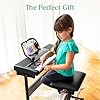

Best Choice Products 61-Key Electronic Keyboard Piano Portable Electric Keyboard Complete Beginner Set w/LED Screen, Stand, Bench, Headphones - Black
7% OffForte, represented by f, stands for loud. Playing forte involves using more arm weight and faster key descent. It is often utilized to convey excitement or highlight a particular section within the music.
Fortissimo, marked as ff, indicates very loud. This dynamic requires significant energy, involving the entire arm to drive the keys down with power and sustain the volume. Fortissimo passages are impactful and are used to express the most intense parts of the music.
Exercises to Develop Control Over Dynamics
Focus on slowly increasing and decreasing the volume over a sustained note or a long musical phrase. Start pianissimo (very soft), gradually increase to fortissimo (very loud), and then slowly decrease back to pianissimo. This exercise helps in developing the sensitivity of your finger touch and control over the sound intensity on the piano.
Practice playing scales or a passage of a piece with varying accent patterns. For instance, accent every third or fourth note to challenge your control and help in emphasizing certain notes while keeping others at a lower dynamic. This enhances your ability to bring out melodic lines amidst a texture of notes.
When playing a scale, alternate between soft and loud dynamics. For example, play two notes softly followed by two notes loudly, and repeat this pattern throughout the scale. This helps train your hands to quickly and smoothly adjust the amount of pressure applied, which is crucial for achieving dynamic variation.
Play with one hand loud while the other plays softly. This is particularly useful for pieces where one hand carries the melody while the other provides a subtle accompaniment. This exercise builds the ability to independently control the dynamics of each hand, a vital skill in more advanced compositions.
Choose a short musical phrase and play it repeatedly, changing the dynamics with each repetition. Start softly, then play it loudly, and finally return to a soft dynamic. This method not only improves dynamic control but also enhances your ability to maintain an expressive quality during repetitive practice sessions.
Incorporate the left pedal (una corda pedal) exercises into your practice sessions to explore different tonal colors and dynamic ranges. Experiment by playing passages using the pedal and then without, to hear the difference in dynamics and also understand the effect of pedal use on your playing dynamics.
Listen to recordings of professional pianists and try to emulate their dynamic expressions. Focus on how they shape phrases, where they increase intensity, and how they manage subtle dynamic changes. Replicate this in your playing to develop a nuanced sense of dynamics in various musical contexts.